Photographs of things
that have never existed
A film camera for things that have never existed, with real glass in front of it.
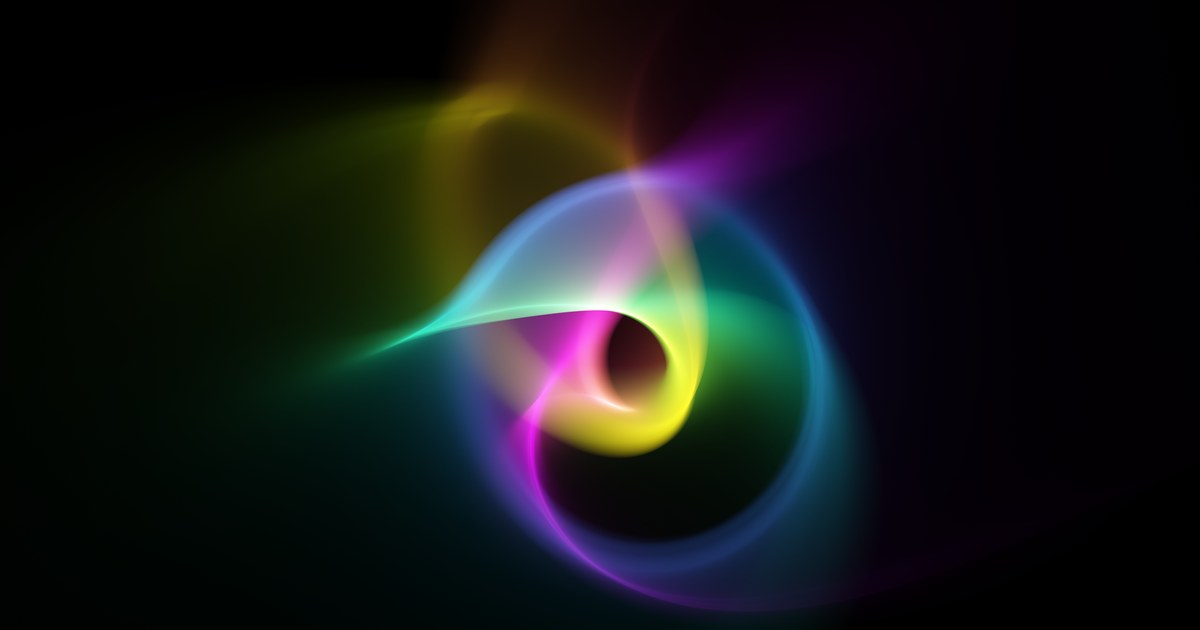
The subjects are mathematical objects: sixty-eight of them, each a few lines of arithmetic rather than a model on a disk. The camera is a four-by-five sheet that exists only as a program: the focal length falls out of a declared field of view, the aperture is a real entrance pupil computed from it, and the exposure accumulates one pass at a time and converges, because that is what an exposure does.
In front of it is real glass. A thousand and nine objectives, 1840 to 2007, each traced from the radii and thicknesses its own patent records. Their faults are not dialled in. They are what the tracing produces, and where a design refuses to trace honestly the camera says so rather than substituting the nearest survivor.
None of that makes a picture better. It makes it checkable, which is a different property and a more useful one.
Play
The atlas runs in a browser. Sixty-eight objects, drawn a million points at a time, with the levers exposed, which is how anybody, including me, finds out what they do.
Give
The large-format practice has a name, platonography, and its biggest photographs are public works: gigapixel frames computed by whoever shows up, verified by one another, painting themselves onto a public page as they land.
Read
Volume one is the instrument described the way a camera is described: what it is, what it measures, and what it does not do, with the absences printed at the same size as the measurements.
Own
Prints are made one at a time, on cotton rag. Each carries the full parameter set it was made from, so a print made next year can be measured against the one before it.